Boat Detailing on the Gulf Coast: What Every Owner Needs to Know
Learn everything you need to maintain your boat, as well as when a professional detailer is needed.

Your trusted boat detailing experts in Gulf Shores, AL
March 21st, 2026
Tl;dr summary: Between the relentless Gulf Coast sun, saltwater exposure, and year-round humidity, your boat takes a beating that most inland owners never have to think about. This guide breaks down exactly what professional boat detailing covers, when you actually need it, how often to book it, and what you can handle yourself — written specifically for boat owners in Foley, Gulf Shores, Orange Beach, Pensacola, and across Baldwin County & Escambia County!
Your Boat Deserves More Than a Rinse
You rinse it off after every trip. You towel down the seats. Maybe you throw a cover on it when you're not on the water. But if that's the extent of your boat care routine, the Gulf Coast is quietly winning the battle against your investment.
Salt air doesn't stop working when your boat does. UV rays are relentless from March through October — and honestly, the other months aren't much better. Furthermore, humidity here doesn't just make the summer uncomfortable; it creates the perfect conditions for mold, mildew, and oxidation to take hold, even on a boat that looks clean from the dock.
The difference between a boat that holds its value and one that looks worn out in five years almost always comes down to one thing: regular, proper detailing. Here's what you need to know.
What Does Professional Boat Detailing in Baldwin County Actually Include?
This is worth understanding before you book anything, because "boat detailing" can mean very different things depending on who you call, and what service you need.
Exterior Boat Work
Exterior work on boats starts with a thorough washdown using marine-safe soaps and soft-bristle brushes to remove salt, algae, grime, and waterline scum. From there, professionals address oxidation — that chalky, faded look that hits gelcoat hard in coastal climates — using marine-grade compounds and polishing machines.
Once the surface is clean and corrected, a wax, polymer sealant, or ceramic coating is applied to protect it from future sun and salt damage. Metal polishing is also part of this stage, keeping your stainless railings, cleats, and hardware from developing the rust streaks and tea staining that saltwater causes.
In harsh coastal environments, UV exposure weakens a gelcoat's surface, making it more porous and susceptible to salt intrusion. This accelerates the oxidation process, meaning the rate of deterioration is non-linear. Put simply: the longer you wait, the harder it gets to fix.
Interior Boat Work
Interior work covers everything below deck and inside the cockpit. Professionals wipe down and condition vinyl seats, carpets, and leather surfaces, and also clean, disinfect, and deodorize, leaving no corner untouched. This matters especially here, where heat and humidity turn any moisture trapped in cushions or carpet into a mold problem fast.
Protective Treatments
Protective measures for your boat are where a detail becomes a real investment. Options typically include marine wax (good for 3–6 months), polymer sealants (lasting up to a year), and ceramic coatings, which form a UV-resistant, hydrophobic barrier that shields your gelcoat from salt, sun, and water and can last up to two years with proper maintenance.
The Gulf Coast Factor: Why Local Conditions Change Everything
Boat owners in the Midwest or the mountains can get away with detailing once a year, maybe less. On the Gulf Coast, that approach will cost you far more in repairs down the road.
The threats here don't act in isolation — they work together as an accelerant. Salt spray can reach boats on trailers or in storage near the coast, so the assault is constant. Humidity creates an ideal breeding ground for mold, mildew, and fungi, especially in cabins, storage compartments, and other enclosed spaces — leading not only to unpleasant odors and material degradation, but also causing damage to electrical connections.
Boats docked or stored in Foley, Gulf Shores, Orange Beach, and Pensacola are essentially in a permanent salt bath. Even when you're not running the boat, salt deposits are accumulating, UV is degrading the gelcoat, and moisture is finding its way into every gap it can.
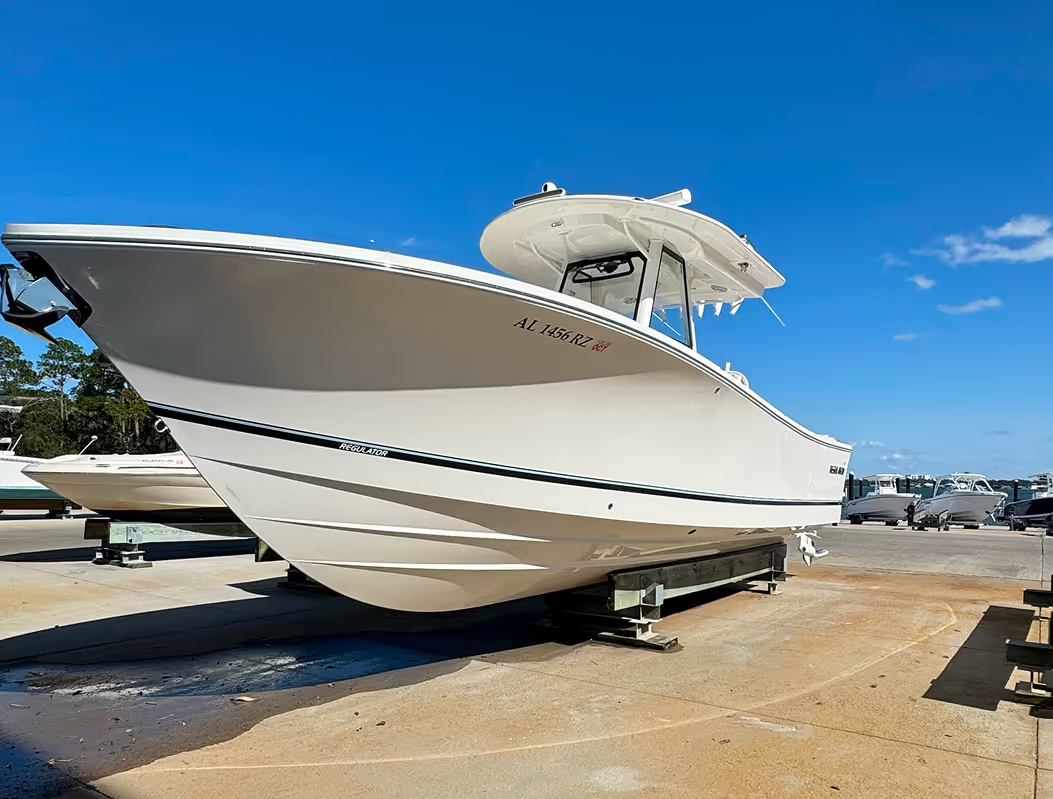

Let Gulf Shores & Orange Beach's most trusted detailing company worry about your vessel recovery and maintenance.
How Often Should Gulf Coast Boat Owners Get a Professional Detail?
The honest answer is: more often than you probably think. Here's a practical schedule that professionals in our region consistently recommend.
At every outing:
A freshwater rinse to knock off salt and loose grime. This is something you can do yourself and should never skip. Wipe down vinyl seats and glass surfaces while you're at it.
Monthly:
A proper wash with marine soap, not just a rinse. Clean and inspect windows, brightwork, and any enclosed spaces for early signs of mildew. A quick inspection of all areas for new mildew spots, especially in the cabin and storage lockers, should be performed every month.
3-6 Months:
This is your professional detail window. For optimal protection and appearance in coastal environments like Pensacola, Gulf Breeze, and Perdido Key, professional boat detailing every 3 to 6 months is recommended to prevent oxidation, salt buildup, and UV damage. If your boat is in the water full-time or sees heavy weekend use, lean toward every 3 months. A detailer serving the Gulf Coast recommends waxing the entire boat 4 times per year, noting that dullness and shine loss will be greater on the topside since it receives the most daily sun.
Once a year (at minimum):
A full professional assessment — gelcoat inspection, interior deep clean, oxidation treatment if needed, and a fresh round of protective coating. Think of this as your boat's annual physical.
Signs You're Overdue for a Professional Detail
It's not always obvious when routine maintenance crosses into professional territory. Here are the things to watch for:
Your gelcoat looks chalky, dull, or faded rather than glossy. That's oxidation, and it will only deepen without treatment.
You're noticing dark streaks or rusty-looking stains on the hull or near metal hardware.
Your vinyl seats have developed gray or black mildew spots, or they've started to crack and stiffen.
There's a musty smell that doesn't go away even after airing out the cabin.
Your boat is coming out of long-term storage — even a covered boat collects contaminants over months of sitting.
What You Can Handle Yourself (And What You Can't)
✅ Post-trip rinse & wipe down.
Every time, no exceptions. A garden hose and a chamois go a long way toward keeping salt from bonding to surfaces.
✅ Light vinyl cleaning.
Fresh bird droppings, sunscreen smears, and minor surface stains can be handled with a marine vinyl cleaner and a microfiber cloth. Act fast and you'll usually keep stains from setting.
✅ Early mildew on seat surfaces.
If you catch it while it's still surface-level, a diluted white vinegar solution or a marine mildew spray can knock it back. The key word is "surface-level" — if it's gotten into the cushion foam, that's a professional job.
✅ Interior dust and debris.
Vacuuming carpet, wiping down the dash and console, and emptying storage compartments are all easy maintenance tasks that make a real difference.
❌ Gelcoat Oxidation
Once the chalky, faded look sets in, you need compound-and-polish equipment and professional-grade products to correct it without causing further damage. Doing this wrong with the wrong pad speed or abrasive can permanently damage the gelcoat surface. Professional grade rubbing compounds can bring back to life even heavily sun-faded and chalky boats — but more damaged surfaces require a more potent product, and highly trained professionals will recommend the best approach.
❌ Mold in carpet, cushions, or compartments.
Surface mold is one thing, but mold that has gotten into padding, foam, or enclosed spaces requires professional extraction and treatment. On the Gulf Coast, mold can hide inside cushions and beneath carpet backing while looking fine on the surface. Attempting to clean it yourself risks spreading spores or leaving the root cause intact.
❌ Set-in waterline staining.
Those brown or rust-colored bands at the waterline are a combination of minerals, algae, and oxidation. Consumer products rarely cut it. Professionals use targeted marine stain removers and mechanical polishing to address them properly.
❌ Full Oxidation Removal Before Resale or After Storage
If your boat has been neglected for more than a season, or you're preparing it for sale, a multi-step compound, polish, and protective coat application is not a DIY project. For heavily oxidized boats, professionals may recommend wet sanding followed by multi-step compounding and polishing — assessing the boat's condition first and recommending the best restoration approach for the owner's budget and needs.
❌ Smoke or deep odor removal.
Cigarette smoke embeds into upholstery, carpet, headliners, and even air vents. Professional ozone treatment is the only reliable solution — no amount of airing out or spray deodorizer will fully eliminate it.
A Note on Ceramic Coatings for Boats
If you're looking for the best long-term protection with the least ongoing maintenance, ceramic coating is worth the upfront investment. Ceramic coatings are especially effective after oxidation removal and polishing, as they seal in the restored finish and provide a long-lasting barrier against future wear. Benefits include UV and oxidation protection, a glossy hydrophobic finish that causes water, grime, and dirt to slide right off, and a reduction in the frequency of waxing and detailing needed.
For a boat that's docked year-round on the Gulf Coast, this is one of the smartest protective investments you can make.
The Bottom Line for Gulf Coast Boat Owners
Your boat is likely one of the largest investments you've made. The Gulf Coast is one of the harshest environments that investment can live in. The combination of salt air, intense UV radiation, and humidity doesn't take days off — but a proper detailing routine, anchored by professional service every few months, gives your gelcoat, vinyl, metal, and interior the protection they need to stay in great shape for the long haul.
At Southern Shine Mobile Detailing, we come to you — whether your boat is docked in Orange Beach, on a trailer in Foley, or stored in a marina in Gulf Shores. We know what the Gulf Coast does to vessels because we work on them frequently.
IMPORTANT INFO

We respect your privacy. Your contact information is only used to respond to inquiries and provide our services. We do not share or sell your personal information.