Here's why cars in lower Baldwin County need more care than just a basic tunnel wash.
Learn how the climate of lower alabama affects your personal vehicles, and how Southern Shine Mobile Detailing can help save you money

Your trusted detailing experts in Baldwin County
February 4th, 2026
Tl;dr summary: Living in lower Baldwin County means your car faces a threat that people who don't live on the Gulf don't experience; salt air corrodes metal 10x faster than dry air, UV rays that cook your paint, and humidity that keeps everything in prime condition to deteriorate over the years. A basic wash or a tunnel car wash removes surface dirt, but does nothing to stop or prevent either of these 3 coastal threats to your auto investment. Professional detailing fights back with decontamination products, and protective products, creating a 1-2 punch that restores and protects your car from our brutal Gulf Coast environment. Here at Southern Shine Mobile Detailing, we do this for our clientele at an affordable price with a flawless track record... but that's not the focus of this article. Below we attempt to educate the Gulf Shores, Foley area on why and how you can protect your vehicle investment. Enjoy!
- Salt air corrodes metal 10x faster than dry air!
- Powerful UV rays cook your paint's finish.
- Constant suffocating humidity aids in deteriorating your interior/exterior.
Introduction
When you think of car detailing, what likely comes to mind is blindingly clean chrome rims, sparkling paint, and a refreshed windshield. But what about the part of your car that you actually sit inside? Interior car detailing is more than just aesthetics. It can play a hefty role in your health, comfort, peace of mind, and your car's longevity. Here in Foley, AL, we spend a lot of time and attention to detail in our client's interiors, because that's what makes our clients smile and take a deep breath when they step into their vehicle again. In this post, we share five key benefits of professional interior detailing that go beyond a spotless appearance, and why they matter in our Gulf Coast climate.

Let Baldwin County's most trusted detailer worry about your car's maintenance!
Baldwin County's Climate By The Numbers
Let's start with the data and the facts about where we live:
- 222 sunny days per year (that's 17 days MORE than the national average)
- 66 inches of rain annually—28 inches above the U.S. average
- Summer highs around 90°F, but your car's surface? Way hotter
- UV index regularly hitting 7+ (that's in the "High" damage category)
- Humid subtropical climate with hot, humid summers (currently showing 76-96% humidity depending on time of day)
Translation: Your car is getting absolutely cooked, soaked, and corroded on repeat, 365 days a year. Let's break down what that actually means.
Threat 1: Salt Air
Here's the brutal science:
Saltwater corrodes metals five times faster than freshwater, but moist salt air? Ten times faster than dry, salt-free air. Read that again. Ten times faster. Unlike our friends up north who deal with road salt for a few winter months, we have coastal salt air operating year-round, settling onto your paint, trim, and seams with every single Gulf breeze.
How it actually works:
You know that sticky feeling in the air on humid days? That moisture provides the electrolyte component needed for corrosion, which is why cars in high-humidity climates or near coastal communities rust faster. The salt particles don't just sit on top of your paint looking innocent—they settle into tiny scratches, around trim pieces, and inside wheel wells, keeping the corrosion process going long after your beach day. And here's the kicker: Salt air can travel as far as five miles inland. So even if you live in Foley or north of the Intracoastal, you're not safe. Your car is still getting hit with airborne salt particles daily.
A look at what is actually deteriorating:
- Your clear coat (protective layer over your paint)
- Chrome trim, door handles, and badges
- Brake components
- Wheel wells and undercarriage
- Basically any exposed metal on your vehicle
Threat 2: UV Rays & Heat (The Paint Destroyer)
Pop quiz: When it's 95°F outside and you park at The Wharf for a few hours, how hot does your car's paint actually get?
Try 140°F. Or higher. 🔥
When temperatures regularly hit the mid-90s during peak summer months, your car's surface can easily reach 140°F or higher when parked in direct sunlight. Got a dark colored vehicle? Black, navy, and dark red cars can reach surface temperatures exceeding 180°F. And it's not just the heat from above. Asphalt temperatures can exceed 150°F, and the reflected heat and UV radiation create an oven effect that attacks your paint from multiple directions. Whether you're parked at OWA, Tanger Outlets, or just running errands around town, your vehicle is taking weeks worth of normal UV exposure in just a few hours.
What happens to your paint over time:
Stage 1 - Oxidation:
Heat and oxygen combine to break down paint molecules, creating that chalky, dull appearance that makes cars look old and neglected. This accelerates dramatically in temperatures above 90°F. You've seen it on older cars around town. That's not just "dirt", it's a chemical breakdown.
Stage 2 - Clear Coat Failure:
UV rays break down the molecular structure of your car's paint, causing prolonged exposure to sunlight to fade the vibrant color. This is why red cars turn pink and black cars turn gray over time.
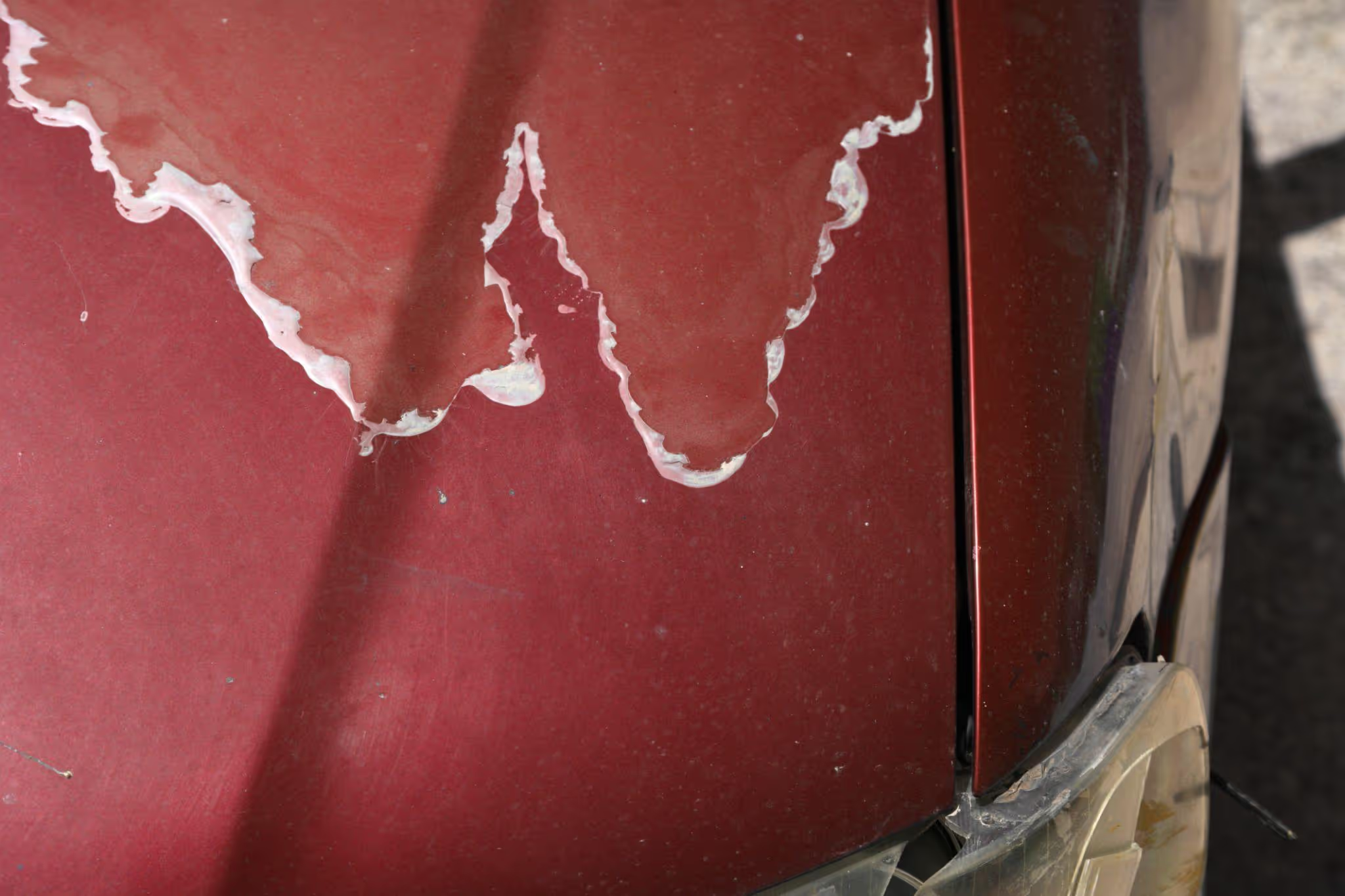
Stage 3 - Cracking & Peeling:
As the sun heats your car's surface, the paint expands, and when the temperature drops, it contracts—this constant expansion and contraction can cause the paint to crack and peel over time. Once you hit this stage, you're looking at a full repaint.
Threat 3: Humidity
Baldwin County has a humid subtropical climate with hot, humid summers, and if you check the weather right now, you'll see humidity levels bouncing between 76-96% throughout the day.
That constant moisture in the air:
- Keeps salt particles active and corrosive (they need moisture to do their damage)
- Combines with elevated temperatures, causing chemical reactions to double in effect for every 10 degrees Fahrenheit increase
- Creates those water spots that literally etch into your clear coat
- Promotes mold and mildew growth inside your car
- Breaks down rubber seals and weatherstripping faster
Basically, the humidity is the middleman that makes everything else worse. It keeps the salt working, it amplifies heat damage, and it creates its own problems on top of that.
Why Your Regular Car Wash Isn't Cutting It
Look, we're not knocking car washes. They're great for removing mud, bird droppings, and surface grime. Especially if you're about to drive to an event or an occasion. But here's what they cannot do:
❌ Remove Bonded Contaminants
That salt we talked about? It settles into scratches and under trim where your wash mitt can't reach. Same with tar from Beach Boulevard, tree sap, and industrial fallout. These particles are chemically bonded to your paint. Soap and water alone won't remove them.
❌ Reverse UV Damage
Once oxidation starts, you can't wash it away. That chalky, faded appearance? The damage is already done to the clear coat. It needs to be corrected, not washed.
❌ Provide Protection
A basic wash leaves your paint completely exposed. Zero protection against the next salt particle, the next UV ray, the next rainstorm with mineral deposits. You're essentially just cleaning it so it can get damaged again immediately.
❌ Actually Decontaminate
If you run your hand over your "clean" car after a wash and it still feels rough or gritty, that's bonded contamination. Your paint isn't actually clean—it just looks clean.
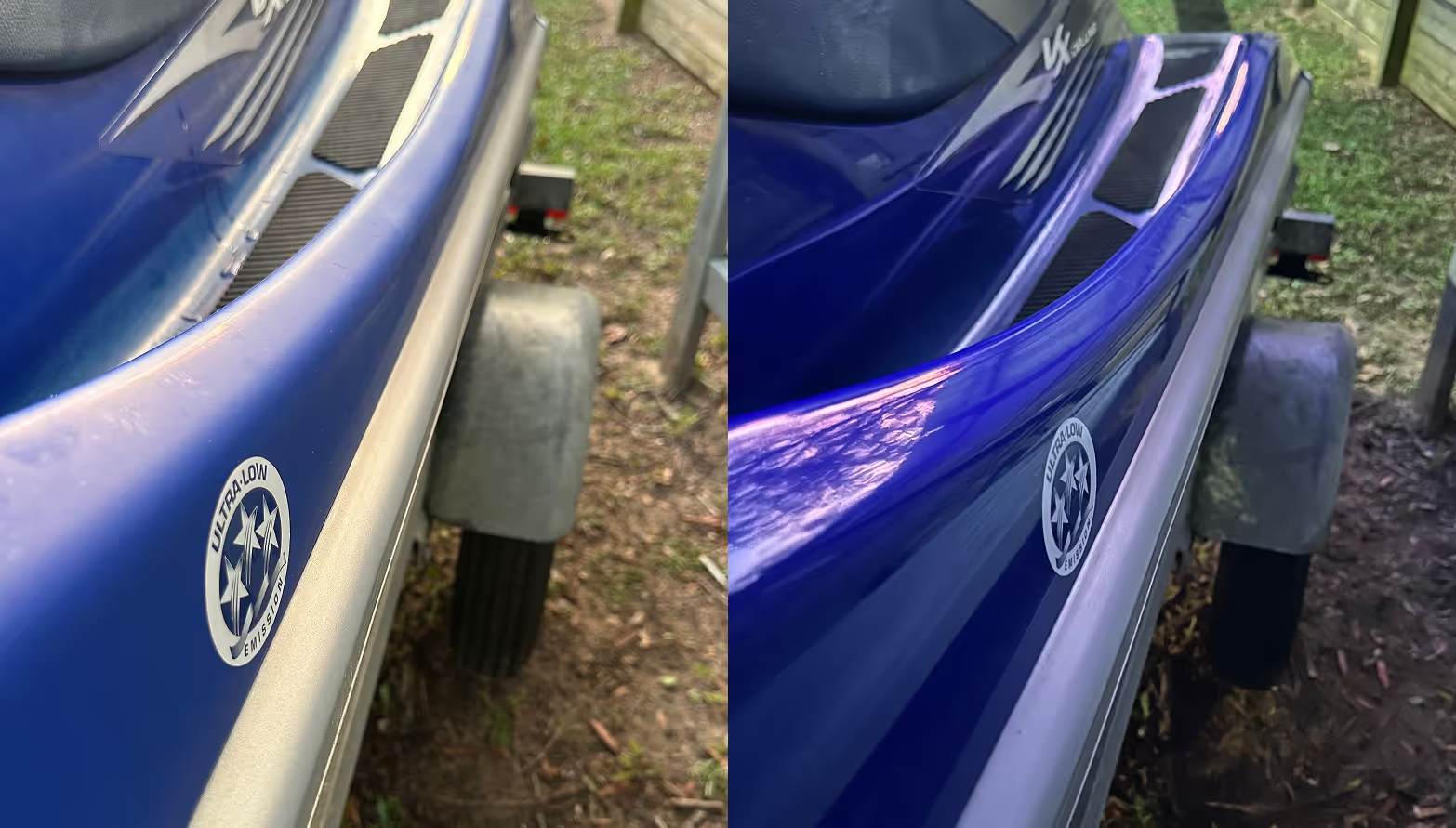
The Southern Shine Detailing Difference
Professional detailing isn't about making your car shiny (though that's a nice bonus). It's about systematically addressing each threat your vehicle faces in Baldwin County's climate.
Here's what we offer (or any professional, reliable detailer for that matter) as the solution:
Step 1: Paint Decontamination
This is where we remove everything a basic wash can't touch. Using a clay bar treatment, we physically pull out bonded contaminants such as salt particles, tar, industrial fallout, tree sap that are embedded at the "hard to see" level. When we're done, your paint will feel glass smooth instead of gritty.
Step 2: Paint Correction
This step removes the damage that's already occurred. Through controlled abrasion (basically using ultra fine polishes), we remove oxidized clear coat layers, UV damage, water spot etching, and minor scratches. This restores the original depth and clarity of your paint. It's like resetting the clock on your paint's condition.
Step 3: Protection (This Is The Game Changer)
Here's where we actually shield your vehicle from future damage. Coatings and sealants are a liquid polymer that forms a durable, protective layer when applied to your vehicle's paint, bonding chemically with the factory paint and offering defense against environmental contaminants, UV rays, bird droppings, tree sap, and dirt.
Step 4: Interior Protection
Your dashboard, door panels, leather, wood, and seats are getting the same UV assault. Professional UV protectants prevent the cracking and fading that's basically guaranteed in our climate without treatment.
Southern Shine Mobile Detailing is your trusted detailing partner in the Baldwin County region you can count on to reliably restore, protect, and maintain your car's paint.
IMPORTANT INFO

We respect your privacy. Your contact information is only used to respond to inquiries and provide our services. We do not share or sell your personal information.